

NEW RELEASE!
NeuroEM Platform Milestone: Interim Results in Cognitively Normal Users
Early cognitive and exploratory biomarker findings support NeuroEM’s platform development and Wavium launch readiness
Summary
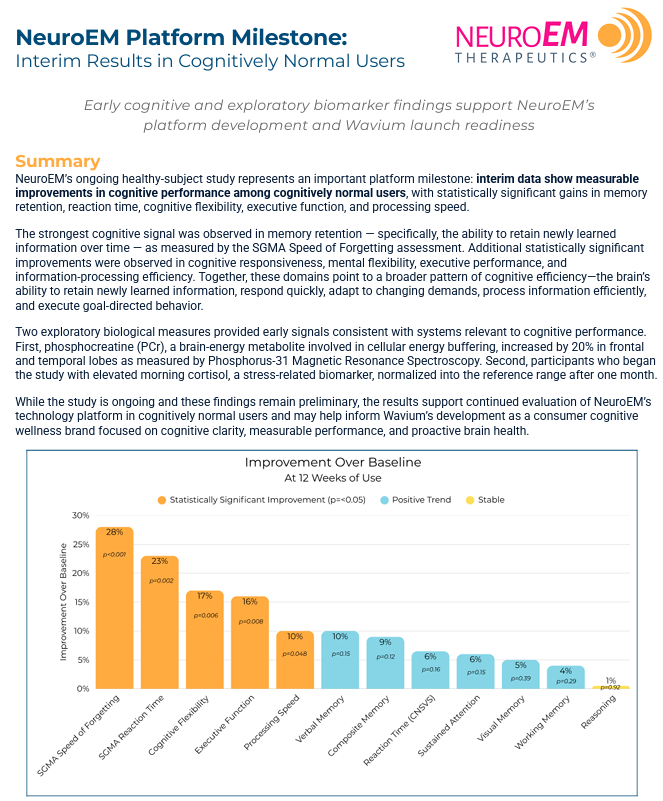
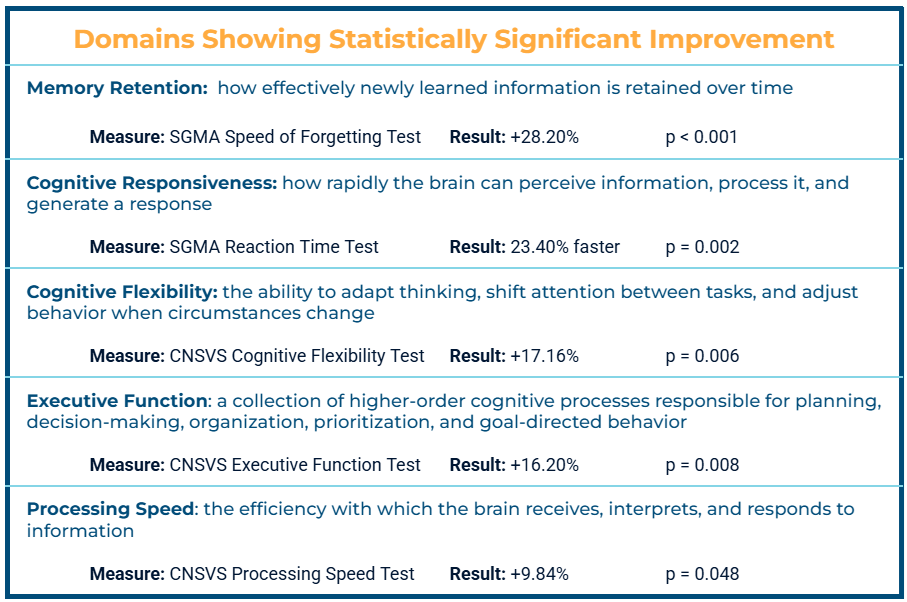
NeuroEM’s ongoing healthy-subject study represents an important platform milestone: interim data show measurable improvements in cognitive performance among cognitively normal users, with statistically significant gains in memory retention, reaction time, cognitive flexibility, executive function, and processing speed.
The strongest cognitive signal was observed in memory retention — specifically, the ability to retain newly learned information over time — as measured by the SGMA Speed of Forgetting assessment. Additional statistically significant improvements were observed in cognitive responsiveness, mental flexibility, executive performance, and information-processing efficiency. Together, these domains point to a broader pattern of cognitive efficiency—the brain’s ability to retain newly learned information, respond quickly, adapt to changing demands, process information efficiently, and execute goal-directed behavior.
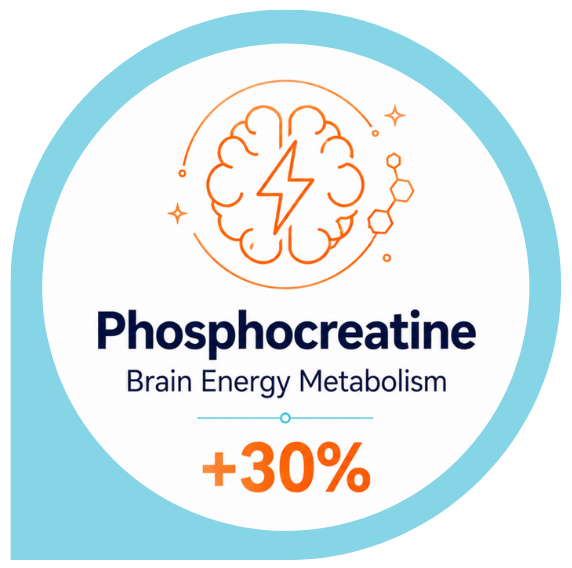
Two exploratory biological measures provided early signals consistent with systems relevant to cognitive performance. First, phosphocreatine (PCr), a brain-energy metabolite involved in cellular energy buffering, increased by 30% in frontal and temporal lobes as measured by Phosphorus-31 Magnetic Resonance Spectroscopy. Second, participants who began the study with elevated morning cortisol, a stress-related biomarker, normalized into the reference range after one month.
While the study is ongoing and these findings remain preliminary, the results support continued evaluation of NeuroEM’s technology platform in cognitively normal users and may help inform Wavium’s development as a consumer cognitive wellness brand focused on cognitive clarity, measurable performance, and proactive brain health.
Cognitive Performance Results
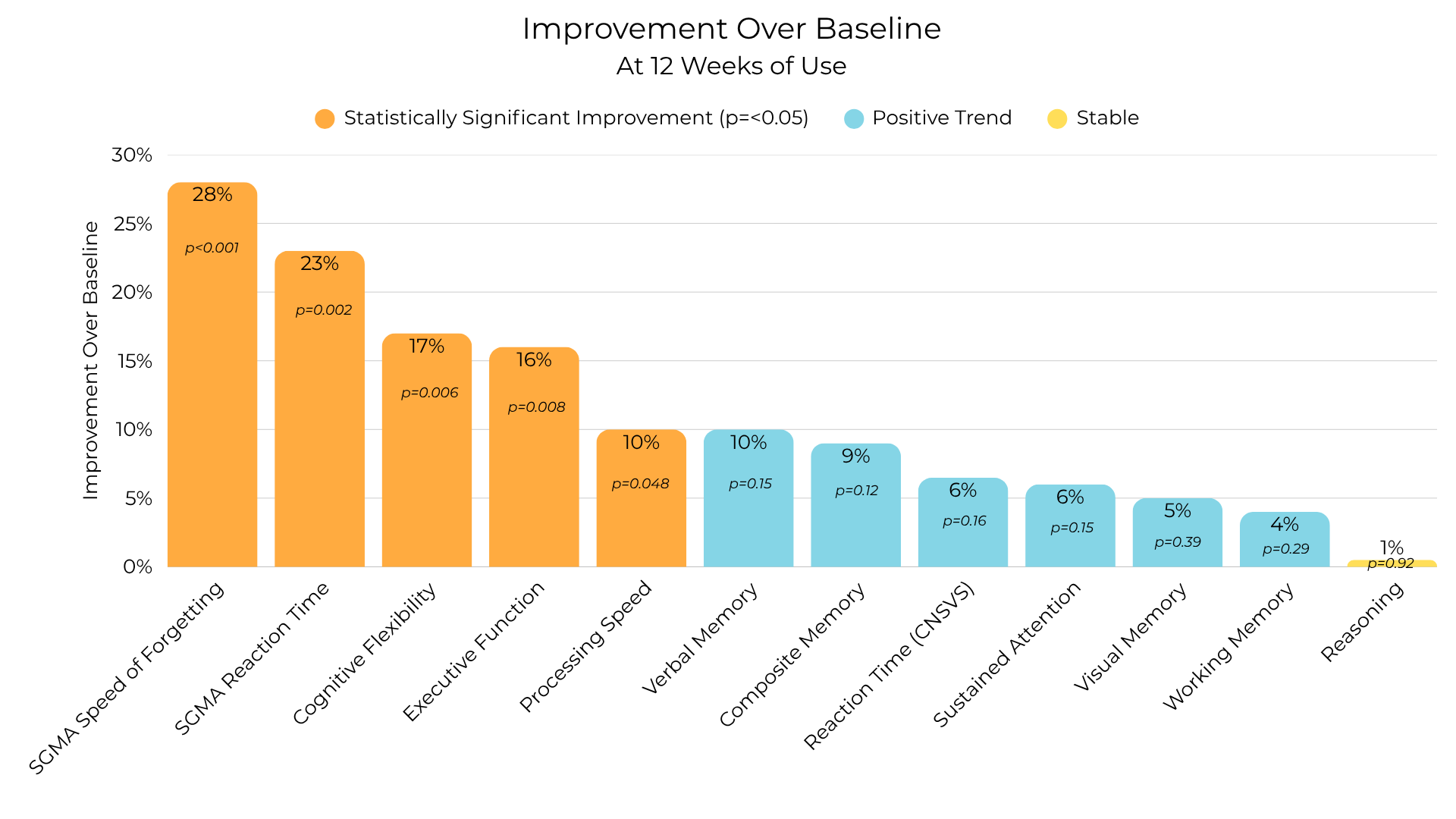
NeuroEM’s ongoing study in cognitively normal users is showing an encouraging early pattern: participants have demonstrated measurable improvements across multiple cognitive performance domains, with the strongest signals in memory retention, reaction time, cognitive flexibility, executive function, and processing speed.
Longitudinal mixed-effects analyses found statistically significant weekly improvements in five cognitive measures: memory retention, measured by the SGMA Speed of Forgetting assessment; reaction time, measured by the SGMA Reaction Time assessment; and Cognitive Flexibility, Executive Function, and Processing Speed, measured using CNS Vital Signs.
Across the 12 cognitive domains assessed, the results showed a consistently favorable trajectory: 11 domains demonstrated positive modeled change over time, while Reasoning remained essentially stable. No domain demonstrated a statistically significant decline, supporting an overall pattern of preserved cognitive performance.
The most important point is not any single result, but the convergence of improvement across multiple independent cognitive measures. The pattern is consistent with broad support for cognitive performance, particularly in executive processing, memory retention, and response efficiency, rather than an isolated effect on a single test or a narrow cognitive function.
What the Findings Mean in Everyday Performance
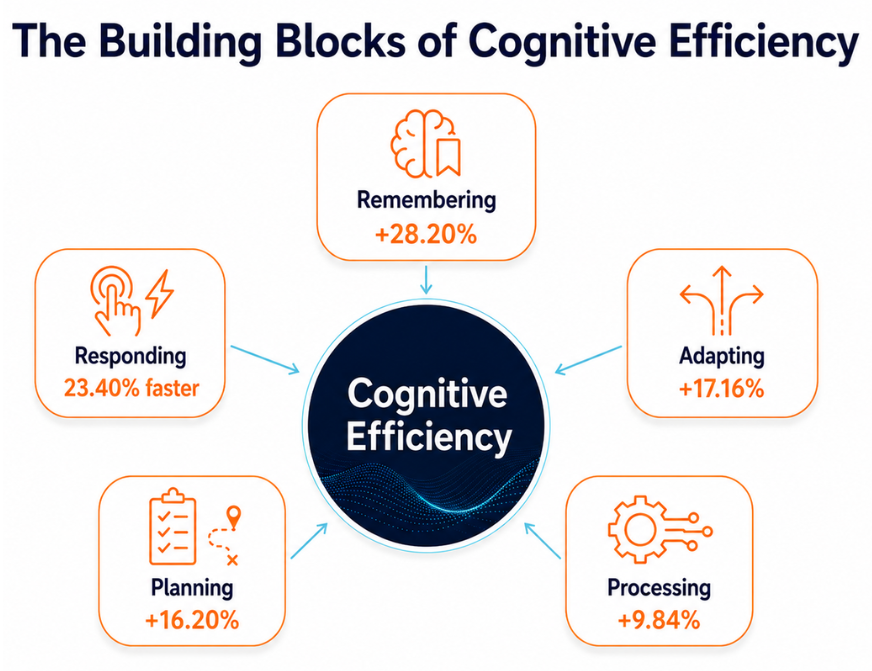
The statistically significant findings are most meaningful when translated into everyday cognitive function. Together, these domains support what can be described as cognitive efficiency: the ability to process information rapidly, retain learned information, adapt to changing demands, and execute goal-directed behavior.
Taken together, these findings suggest improvements across several fundamental aspects of cognitive performance, including memory retention, cognitive responsiveness, executive control, adaptability, and information-processing efficiency.
The consistency of improvement across multiple independent cognitive measures is scientifically meaningful because it suggests a broader pattern rather than an isolated finding. A single positive result could reflect a narrow effect or isolated test variation. By contrast, the current pattern suggests broader support for healthy cognitive performance across several domains that matter in everyday function.
This convergence strengthens the platform narrative for NeuroEM and directly supports Wavium’s consumer wellness positioning around cognitive clarity, measurable performance, and proactive brain health.
Exploratory Biological Correlates
The study also includes early exploratory biomarker observations that strengthen the biological plausibility of the cognitive findings. These observations do not prove a specific mechanism, but they provide important signals that can guide future research.
Phosphocreatine and Brain Energy Metabolism
A 30% increase in phosphocreatine was observed in both frontal and temporal lobes using Phosphorus-31 Magnetic Resonance Spectroscopy.
Phosphocreatine is a key component of the brain’s energy-buffering system, helping maintain rapid ATP availability during periods of high cellular energy demand. This is biologically important because the brain depends on a continuous energy supply to support synaptic transmission, neural signaling, memory formation, attention, and executive processing.
The observation is particularly relevant because the greatest cognitive changes were seen in domains that depend on efficient frontal and temporal network performance, including executive function, processing speed, cognitive flexibility, and memory retention.
Although exploratory and not sufficient to establish mechanism, this finding provides an early biological signal consistent with the possibility that NeuroEM’s technology may influence systems involved in cerebral bioenergetic reserve.
Cortisol and Healthy Stress Regulation
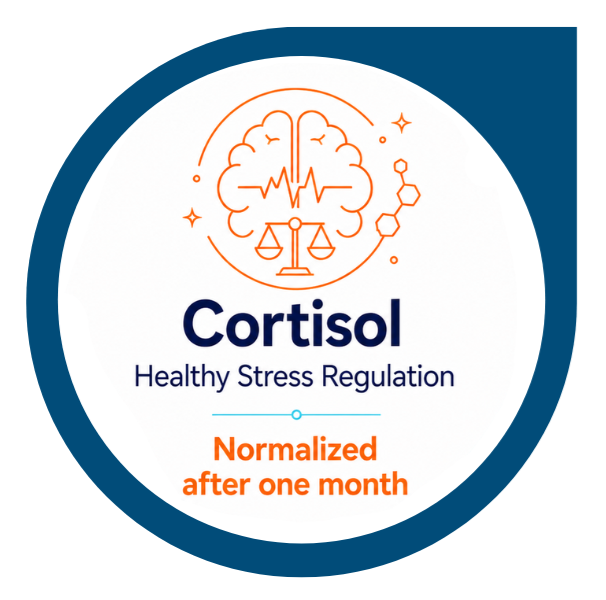
Participants with elevated baseline morning cortisol normalized into the reference range after one month.
This observation is meaningful because cortisol is closely linked to the body’s stress response system. Elevated cortisol levels can negatively affect attention, working memory, processing speed, sleep quality, and hippocampal function, all of which are relevant to cognitive performance.
The current finding is best interpreted as a normalizing observation among participants who entered the study with elevated morning cortisol, rather than as evidence of a generalized cortisol-lowering effect. Participants with normal baseline cortisol did not appear to show the same meaningful change, suggesting the signal may reflect support for healthy stress regulation in individuals with elevated baseline levels.
This observation is exploratory and does not establish causality. However, it is directionally consistent with the cognitive findings, particularly the observed improvements in executive function, cognitive flexibility, processing speed, and memory retention.
Integrated Biological Interpretation
Taken together, the cognitive and exploratory biomarker findings suggest a preliminary, hypothesis-generating pattern: the strongest cognitive gains appeared in domains dependent on efficient neural signaling, executive network performance, memory retention, and stress-sensitive cognitive function. In parallel, the biomarker observations point toward systems involved in brain energy availability and healthy stress regulation.
These observations do not establish a mechanism of action. However, they provide a biologically plausible rationale for continued study of how NeuroEM’s technology platform may support cognitive performance in cognitively normal users.
An Important Milestone for NeuroEM
This study marks an important platform milestone for NeuroEM. It is the first research from the company’s technology platform to demonstrate potential value for brain health and cognitive performance in cognitively normal users.
Historically, NeuroEM’s scientific foundation has been built around clinical, disease-oriented research. This healthy-subject study expands that foundation by suggesting that the same core technology platform may also be relevant to proactive cognitive wellness, performance, and healthy aging.
For NeuroEM, this milestone is important for three reasons:
The data suggest that the platform is associated with measurable improvements in cognitive performance among cognitively normal users, particularly in memory retention, processing speed, cognitive flexibility, executive function, and cognitive responsiveness.
The exploratory biomarker observations provide early biological signals that can help shape future mechanistic hypotheses around brain energy metabolism and stress-axis regulation.
The study creates a credible bridge between NeuroEM’s scientific foundation and Wavium’s consumer wellness opportunity, while keeping the clinical and wellness narratives appropriately distinct.
Strategically, this supports a broader platform thesis: NeuroEM’s technology may have relevance not only within regulated clinical pathways, but also in a consumer-facing wellness context focused on cognitive performance, cognitive clarity, and proactive brain health.
Impact on Wavium Launch Readiness
For Wavium, NeuroEM’s consumer cognitive wellness brand, these interim findings help shift the product story from a promising concept to an evidence-informed launch narrative.

The strongest signals align closely with the benefits most likely to matter to Wavium’s target consumers: clearer thinking, faster processing, mental flexibility, memory retention, and sustained support for cognitive performance over time.
The findings also help address a key commercial barrier identified in market research: consumers need proof, credibility, measurable outcomes, and a clearer explanation of the technology’s value before converting at premium price points.
A conjoint analysis conducted in May 2026 found that Wavium’s strongest launch direction is long-term brain health, cognitive clarity, and measurable progress. It also found that in-app cognitive measurement should be a core bundle driver.
For Wavium, the launch-readiness implications are significant:
Wavium can credibly position itself around science-backed cognitive wellness rather than generic wellness language.
The product narrative can focus on measurable cognitive performance instead of broad, difficult-to-substantiate brain-health promises.
The strongest observed benefits align closely with consumer priorities: memory retention, cognitive clarity, faster thinking, mental flexibility, and daily cognitive performance.
The exploratory biomarker findings provide a deeper science layer for investors, practitioners, and science-forward consumers.
Together, these findings support premium positioning centered on cognitive wellness, measurable progress, and proactive brain health.
Closing Summary
These interim findings represent an important step forward for both NeuroEM and Wavium.
For NeuroEM, the study provides the first evidence from the technology platform suggesting potential value for brain health and cognitive performance in cognitively normal users. This expands the platform narrative beyond clinical disease-oriented research and supports continued exploration in proactive cognitive wellness, performance, and healthy aging.
For Wavium, the findings strengthen the foundation for launch readiness. The data support a clear consumer wellness story centered on cognitive clarity, measurable performance, memory retention, faster thinking, mental flexibility, and proactive brain health. The exploratory biomarker observations add scientific depth, helping connect the observed cognitive findings to biologically plausible systems involved in brain energy availability and healthy stress regulation.
The study is ongoing, and the findings remain preliminary. However, the current pattern is encouraging: broad positive movement across cognitive domains, statistically significant gains in key performance measures, and early biological signals that support continued research, investor engagement, and commercialization planning.