

News from NeuroEM
Built Through Battle: Chuck Papageorgiou Of NeuroEM On How Entrepreneurs Fight Through Obstacles and Keep Moving Forward
Published: Oct 8, 2026, by Tavares Beverly, Authority Magazine
The way you do anything is probably the way you do everything. When you’re choosing business partners, pay attention to everything they do.
As a part of this series, we had the pleasure to interview Chuck Papageorgiou.
Chuck Papageorgiou is the CEO and technical officer of NeuroEM. Chuck is a market-proven Executive Leader, Business Operator, Product and Solution Designer, and Enterprise Technologist with over two decades of global business experience in leading organizational turnarounds, business transformation, M&A, and launching startups. His extensive business and investor network values Chuck for his experience, knowledge, and results-driven approach, as well as his ‘get it done’ mentality and passion for building strong teams and client relationships, while helping others succeed. As an entrepreneur, Chuck has founded and launched multiple companies over the last twenty years, raising over $15M in startup capital. As a corporate executive and consultant, he has managed organizations ranging from five-person startups and spin-off divisions to 15,000+ employee global operations. As a Sr. Advisor, he has led or advised on global M&A and restructuring transactions worth over 9 billion dollars in over 40 countries. Chuck was a co-founder and the CEO of WorldWatch Plus — an AI-driven risk management company, sold to Dun and Bradstreet. He is a co-founder and current Managing Partner of Ideasphere Partners, LLC — an investment and advisory firm that delivers expertise and hands-on leadership and execution support in strategy, solution, and product development, operations streamlining, technology architecture and deployment, turnarounds, outsourcing, corporate alliances, and mergers and acquisitions. His clients have included Private Equity and Venture Capital firms and Corporations across the globe.
Thank you so much for joining us in this interview series! Before we begin, can you please introduce yourself? Our readers would love to “get to know you” a bit better. Can you tell us a bit about your ‘backstory’ and how you got started?
I’ve always been “entrepreneurial.” I was born in Cyprus and, at age 14, started working during the summers to pay for anything my parents couldn’t afford (which was basically everything other than school, food and clothes). Eventually, I organized a small group of kids to do odd projects, from loading trucks to cleaning warehouses, and sleeping in a factory monitoring furnaces.
I have also always been a problem solver with an engineering mindset. I went to a magnet technical high school, then after completing my military service, I came to the US to study engineering.
While in school, I started a computer service business to pay for tuition, along with a few other small ventures. While I worked for a couple of companies after school, the biggest change came when UPS (United Parcel Service) recruited me to be the architect of their global data network. My team designed and deployed the seventh-largest private network in the world, spanning dozens of countries. It was an opportunity I thought could help me transition from engineer into “real management.”
At the time, the joke was that UPS was a cross between the Marines and the Quakers: tough, focused on performance, and with almost unrealistic work ethic expectations.
The company put me through training, sent me to workshops, and moved me through the UPS ranks, with me transferring to a new department every year, including IT, HR, Ops, and even Marketing, and finally to Strategic Planning.
I reached a District Manager level seven years before I was 30, and was one of a handful at that age amongst their 30,000 managers. Then I was told I had to wait at least another decade for my next promotion, so, since patience is not one of my virtues, I left to start my own consulting practice.
Over the next three decades, I worked on M&A projects across 47 countries, involving more than a half-dozen companies and transactions valued at over $9 billion. I also worked as the operating executive on a gaming joint venture that developed and delivered online lottery platforms and helped start multiple entrepreneurship and incubator programs in Tampa Bay.
I exited some ventures successfully, while others resulted in losses, but I have always operated in technology. I started building AI technology in the early 1990s while at UPS and continued developing AI solutions over the following years. Eventually, a lifelong friend and business partner, Eric Beach, and I developed an AI platform called WorldWatch Plus, which we sold to Dun & Bradstreet five or six years ago. At that point, I was trying to figure out what to do next when a friend brought NeuroEM Therapeutics to my attention. As much as my VC friends encouraged me to start another AI company, I felt that developing a treatment for Alzheimer’s and advancing brain health would be the perfect capstone to my career as a founder and CEO. So, here I am.
None of us are able to achieve success without some help along the way. Is there a particular person who you are grateful to who helped get you to where you are? Can you share a story?
There have been so many people in my life, from my dad, who brought his stoic approach to life, to my mother, who was an entrepreneur in a world where women were not often allowed to be, and many others. It was my mother who channeled my curiosity into science and technology; the general I worked for in the Army was the one who taught me about leadership; and one of my bosses at UPS who, despite everyone telling him I was “unmanageable,” was the one who took me under his wing, kicked my behind on a regular basis, and taught me how to channel my intensity and energy into becoming an “operator.”
Then there was my friend Doug Curling of ChoicePoint, who recently passed away unexpectedly. He was the person I went to when I needed to question my answers — not to get answers to my questions. We met nearly 30 years ago during a month-long interview process for an executive role at his company. At the end of the process, Doug told me, “Chuck, we can’t offer you a job. If we did, it would be for my job, and I’m not ready to give it up. But we have a strategy project I’d like you to consult on.”
That project turned into a friendship and a mentoring relationship I cherished, one I often described to the people I now mentor, as Doug is my “Chuck.”
He was the person I went to knowing he would unflinchingly and unapologetically tell me what I needed to hear. He held me accountable to my own self-proclaimed standards. He rarely gave me the answer I wanted. Instead, he gave me the questions I needed to consider. Most of the times in the form of, “Is this the best you can do?”
Here is a Doug story; A few years ago, I had an idea for a product and a business. I put what I believed was my best thinking into a pitch deck and flew to Atlanta to meet him for breakfast at 7 a.m. at his favorite café, the same ritual we had shared once a month for more than 10 years when I lived there. After catching up on our families, the world, and our old mutual friends, he quietly flipped through the deck. Then he looked at me and asked that familiar, frustrating question: “Is this the best you can do?” For the next seven months, the routine repeated itself monthly: I would fly to Atlanta, have breakfast with Doug, hear a variance of that question, and go back to the drawing board. In the eighth month, he finished reviewing the deck, looked up, and said: “This is good.” That was when I knew I was ready to launch.
Ok, fantastic. Let’s now shift to the main focus of our interview. Entrepreneurship often looks very different from the outside than it feels on the inside. Can you share one of the most difficult periods you faced as an entrepreneur, and what helped you keep moving forward when giving up might have seemed easier?
There have been a few, but one I remember to this day that was amazingly painful: This was when the CTO I mentioned earlier, Eric, and I found out one that one of the people we thought was another lifelong friend and business partner, stole thousands of documents from our company so they could build a competitive product and set up a competing business, and had even convinced one of our larger clients to break our contract and follow them.
The litigation costs, the loss of revenue, and the distraction nearly bankrupted us, but we couldn’t show that or allow the situation to impact our other clients. Despite the pain and suffering, we smiled, soldiered on, borrowed money, streamlined ops, and did everything we could to make it through until we recovered. And the sadness from that ungratefulness lingered on for a couple of years.
What helped me through all that was the support of my close network of friends, most of whom are entrepreneurs, and the faith our employees had in me that I would always do the right thing and we would eventually make it.
Setbacks can shake even the most confident entrepreneur. When something you believed in fails, whether it is a launch, partnership, investment, hire, or business strategy, how do you process that disappointment and decide what to do next?
I think it starts by assessing the failure points of your plan and accepting that setbacks are inevitable, a.k.a “stuff” happens. I have a fairly detailed approach to risk assessment and management for every project or product I take on, so in most cases I know where the most likely failure point will be and have “contingency plans to my contingency plans” to account for that.
But it’s never a guarantee because, as that most unlikely philosopher, the Boxer Mike Tyson, said, “Everyone has a strategy on how to beat me, until I punch them.”
Knowing that no matter how thorough you think you are, no plan ever survives contact with reality, prepares me to step back when things go wrong and treat failure as a teaching moment. Rather than wallowing in it, I focus on what I can learn from the experience and how I could have prepared better. But sometimes, even after all the analysis and lessons learned, I have to take a more stoic approach and accept that randomness and luck — or the lack thereof — are simply factors we cannot control.
Financial pressure and uncertainty are realities for many founders. Have you ever faced a moment when the future of your business felt genuinely uncertain? What did that experience teach you about making difficult decisions under pressure?
If tolerance for extreme pressure and uncertainty is not in your DNA, you should not be in the startup business or take on the CEO role of a startup.
I can’t think of a time in the last three decades that in any startup, joint venture, or new product line I launched, when the future was guaranteed. And even though my military experience, my time at UPS, and my M&A work in dozens of countries prepared me well to handle pressure and difficult decisions, I still continue to learn new lessons every time.
And sometimes, even when I should know better, I make a bad decision. I remember one time when a major investor kept threatening to exercise a draconian option in their term sheet if we failed to meet a revenue objective; at the same time, a very large customer was asking for a discount. The customer discount was not an unreasonable request, and I would have normally negotiated that, but the loss of revenue would have triggered the option. So, rather than working with the customer to give them the discount they asked for and perhaps find ways to increase the overall revenue from them, I took a hard line and said no to the discount request because of the pressure from the investor.
Predictably, that backfired because nine months later the customer changed suppliers and we lost the entire revenue stream, which triggered the investor option anyway. Because of the pressure, I did not use my downside/upside analysis before I made that decision. If I had, I would have accepted the downside of the investor option compared to the downside of losing a major customer.
However, hindsight is 20/20…as they say.
Entrepreneurship can take a personal toll as well as a professional one. How have you learned to protect your energy, relationships, confidence, and sense of perspective during particularly demanding seasons of building a business?
Unfortunately, the mental health aspect of entrepreneurship rarely receives the attention it requires even though, let’s face it, the toll it extracts on your life can be very significant.
I am, by nature, a very high-energy and intense person, and for the first few years of my working career, I just powered through situations. Eventually I realized I needed both a relief valve and an escape, so I started meditating regularly and keeping a more consistent workout schedule. I started fishing or working in my woodworking shop when I needed to escape.
I still sometimes don’t realize the impact stress has on me, but my wife does and usually says something along the lines of “hey, you need to go fishing or make sawdust,” which is a keyword for “stop being an ogre.” I also have a strong mentor network that, when I think, I am starting to lose perspective, I can count on to help ground me.
Looking back, is there an obstacle or failure that felt devastating at the time but ultimately made you, or your business, stronger? How did that experience change the way you approach challenges today?
Many years ago, I sold a company I started to a larger holding company with some very impressive folks in the C-Suite and backing from a major VC to do roll-ups.
That was my first significant exit, and because I was impressed with the people at the holding company and the VC backing them, I sold my company in exchange for common stock in the holding company worth, on paper, a few million dollars. A couple of years later, with my company being the only profitable division, the roll-up blew up, and they liquidated the company. Lenders got paid first, preferred stock shareholders second, etc. and when it was all said and done, common stock was worth nothing.
I went home, told my wife what happened, and almost sure I would have to file bankruptcy and would never recover. But after a couple of weeks, an old partner called me with a project; I started making money again, avoided bankruptcy, and went on with life.
That experience taught me that entrepreneurship is not just about good engineering and management practices, but also about understanding the legal and regulatory drivers that contribute to success. I dove into understanding term sheets, structures, classes of stock, etc., and today our attorneys joke that I know more about the subject than any CEO should be allowed to know. That has also carried over into every part of business I engage in. I make it a point to know enough to ask the important questions and spot the areas that can be problematic, rather than just rely on experts on my team.
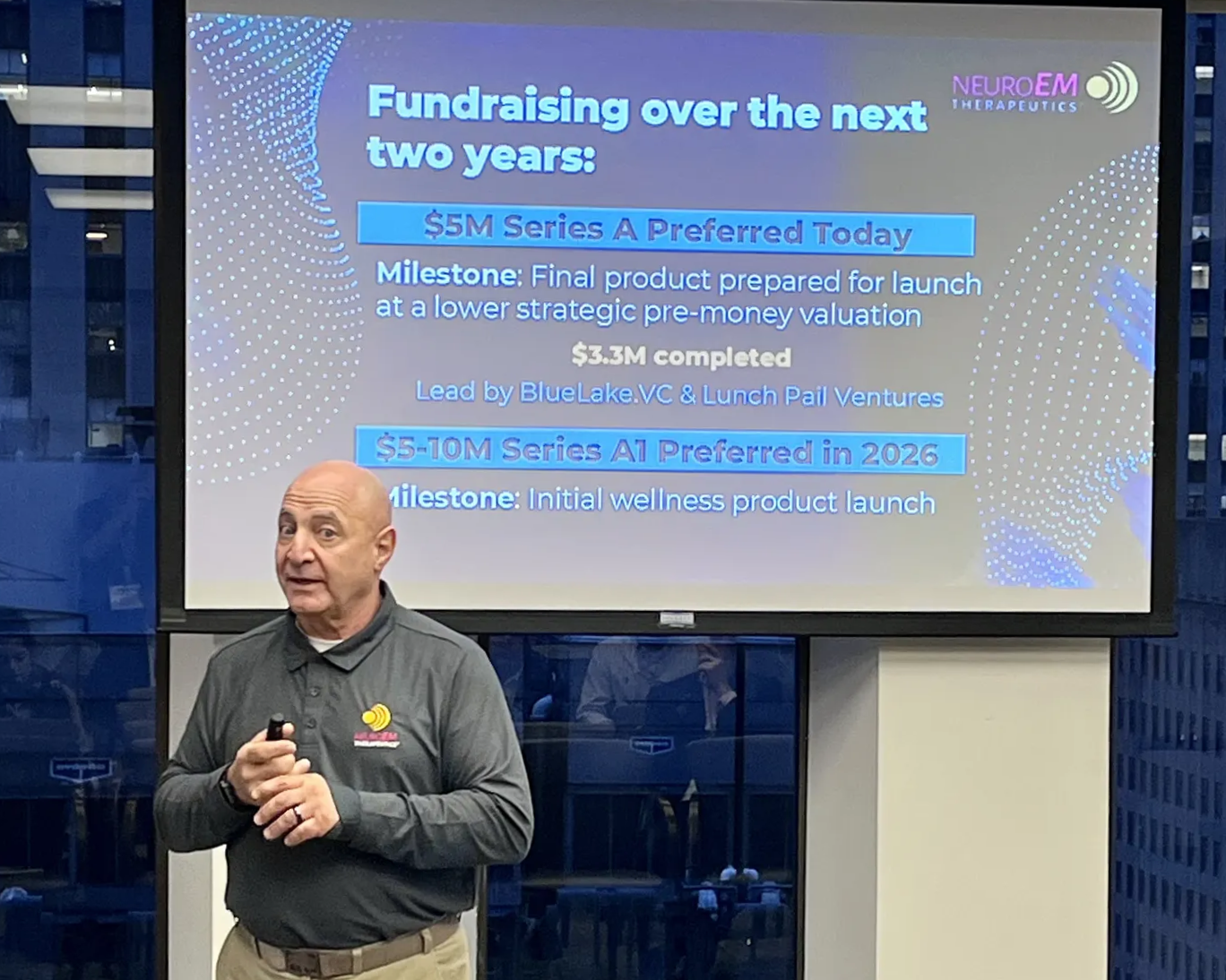
Ok super. Here is the main question of our interview. Based on your experience and success, what are “Five Things Entrepreneurs Need to Fight Through Obstacles and Keep Moving Forward”? Please share a story or an example for each.
1. Never view the effort you put into building your company as a sacrifice!
That’s reserved for soldiers, firefighters, nuns, saints, and parents who care about their children. I say, consider every “sacrifice” you make — working extra hours, not going out on a Friday night, spending more time with customers and investors than with customers — as an investment with a time horizon for a return.
2. Your life partner is extremely important when you’re an entrepreneur.
I am lucky my wife is an entrepreneur as well, so she gets it. But, I’ve known so many people who thought they had a life partner who understood entrepreneurship and the investment, emotional and relational, required to build a company, only to break up one or two years later. When I speak to young entrepreneurs at universities, I always tell them that choosing a life partner is important. That person needs to understand the entrepreneurial lifestyle and the challenges that come with building a company. I tell them how, in the last 35 years, I had to go back and tell my wife three times that the money that we thought we had, just got wiped out for this thing or that, and that I got to take all this money from my retirement fund and put it into this company. Can you imagine? Only an entrepreneur like herself would get it.
3. The way you do anything is the way you do everything.
Pay attention to the actions and behavior of potential business partners. I always tell people, “The way you do anything is probably the way you do everything.” When you’re choosing business partners, pay attention to everything they do. Your college roommate shouldn’t automatically become a 50/50 partner in your company just because you’re friends. Think about how they behave and how they treat other people. If someone is rude or mean to a waiter, they’re probably going to be rude or mean to you. If someone is willing to kick somebody when they’re down, they’re probably going to kick you when you’re down. So, pay attention to the people you bring into your business. And even when you do, you can still get burned. I’ve been screwed three times in 40 years. And all three times, I ignored my own advice. I ignored the little things I noticed and chalked them up to, “Yeah, that’s just the way they are.” So that’s the third lesson: Pay attention.
4. Never confuse activity with action, or effort with result.
I meet a lot of people who say, ‘Look at all the things we’re doing.’ And I’m like, yeah, there’s a lot of activity, but are you making any progress? Or they say “But I am working so hard.” Which I get, but also that’s when I point out they confuse activity, action, or effort with results. Not the same thing, right?
5. Have a code of conduct.
Know who you are. I am a stoic and live my life with three rules: be good at what you do, do the right thing, and help others. Having a code of conduct means knowing who you are and having that as a grounding place. Because if you don’t, you don’t have a benchmark. These three rules define who I am and make life simpler. Whenever I come across something in life or in my entrepreneurial journey, especially when an obstacle comes up that I have to deal with — those are my touchstones: Do the right thing. Be good at what you do. Help others. That’s really the foundation. If somebody told me to put five things together that define how I approach life and business, those three would be at the top of the list.
You are a person of great influence. If you could start a movement that would bring the most amount of good to the most amount of people, what would that be? You never know what your idea can trigger. :-)
If I were a movement, it would be about pulling money together so I can fund smart people and help them find solutions to big problems.
I’ve had that idea for years, and I may still get to do it, but this is where it came from. I was at one of those brainstorming events, and there was a guy in the room, an actual billionaire, who looked at me and said, “You know, you’re a pretty smart guy, but let’s put it to the test. What would you do if I gave you $100 million today, right now?
I say, “Well, that’s easy. I will open up my little black book, call the 50 odd people in there tell them I will fund their current income for the next two years if they join me. Those who do, I will put us all in a room and say, ‘We have five years to turn this hundred million dollars into five billion by finding ways to help the world.”
The world part is because for long-term success youcan’t only just care about money; you have to care about the other things too or it doesn’t work. You can do well by doing good.
It can’t be just about money. Here’s a joke you’ll appreciate. I always tell people, “I’m an ex-Special Forces guy. I understand transportation and logistics. I have friends all over the world. I understand how to move money.” So, if it were just about money, I could be the perfect pirate… Of course, I wouldn’t do that — also because of the “Mama Zoe test.” It’s a simple test, if my mother saw my picture in the newspaper and the headline embarrassed her, I wouldn’t do it.
To me, the idea of a movement is more about having resources available and deploying them to do good while also doing well. That’s the balance. A lot of people hear “movement” and “ideals” and think it’s purely idealistic. But I’m an engineer. I want to figure out how to use the resources I have to create something good and sustainable.
How can our readers further follow your work online?
Company: NeuroEM
Company Social Handles: LinkedIn; Instagram; Facebook
This was very inspiring. Thank you so much for the time you spent with this!
About The Interviewer: Tavares Beverly ( www.tavaresbeverly.com ) is the Founder and CEO of Beverly Boy Productions, a national video production company that has helped organizations tell their stories through video for more than two decades. Over the course of his career, he has worked with everyone from Fortune 500 executives and healthcare professionals to politicians, nonprofit leaders, educators, and artists, gaining a unique perspective on the role communication plays in leadership, business, and human connection. A frequent contributor on topics including communication, entrepreneurship, leadership, and personal development, Tavares believes that the ability to communicate effectively is one of the most valuable skills a person can develop. His work is driven by a passion for helping organizations connect with their audiences and helping individuals unlock their potential through mentorship, perseverance, and meaningful relationships. To learn more, connect with Tavares on LinkedIn or visit www.BeverlyBoy.com . If you’re interested in using the power of storytelling and communication to grow your organization, strengthen your brand, or inspire your audience, he welcomes the opportunity to connect.