Differentiated Technologies Explained
Understanding the Difference
Alzheimer’s disease is a public health concern which affects the lives of millions of patients and caregivers. While there are FDA-approved drugs that address the symptoms or root causes, they come with significant side effects. Researchers have sought alternative treatments for decades, investigating countless emerging and established medical technologies. To understand our place in this landscape, we present here some of the non-pharmacological technologies and their differences.
-
![]()
Transcranial Electromagnetic Treatment with Radio Frequencies (TEMT-RF)
Method: Ultra-high frequency radio waves
Purpose: Modulate brain function and cellular activity
Delivery: Non-invasive wearable headset
-
![]()
Audio-Visual Entrainment (AVE)
Method: Rhythmic auditory and visual stimuli
Purpose: Influence brainwave activity for relaxation or heightened focus
Delivery: Specialized glasses and headphones
-
![]()
Cranial Electrotherapy Stimulation (CES)
Method: Low-level electrical impulses
Purpose: Regulate mood, sleep, and pain perception
Delivery: Electrodes affixed to the skin
-
![]()
Deep Brain Stimulation (DBS)
Method: Targeted pulses of electricity
Purpose: Suppress abnormal brain signals associated with various mood disorders
Delivery: Electrodes surgically implanted into the brain
-
![]()
Fast Gamma Magnetic Stimulation (FGMS)
Method: Magnetic fields oscillating at high gamma frequencies
Purpose: Entrain brain oscillations
Delivery: Headband-mounted coil
-
![]()
Functional Near-Infrared Spectroscopy (fNIRS)
Method: Reflections of near-infrared light
Purpose: Measure changes in blood oxygenation and hemodynamics to infer neural activity
Delivery: Wearable, potentially portable headset
-
![]()
Gamma Sensory Stimulation
Method: Video, audio, and/or tactile stimuli at gamma-range frequency
Purpose: Entrain brain oscillations
Delivery: Wearable or handheld device
-
![]()
Light Therapy (Phototherapy)
Method: Visible light in white or blue frequencies
Purpose: Influence body processes for sleep, mood, and energy
Delivery: External light source
-
![]()
Transcranial Low-Intensity Pulsed-wave Ultrasound (LIPUS)
Method: Low-intensity pulsed sound waves
Purpose: Induce mechanical and thermal effects on brain tissue
Delivery: Monitored external transducer
-
![]()
Microcurrent Electrical Therapy (MET)
Method: Very low-intensity electrical currents
Purpose: Promote cellular repair and reduce pain
Delivery: Electrodes placed on the skin
-
![]()
Photobiomodulation (PBM)
Method: Red or near-infrared light
Purpose: Stimulate mitochondrial activity and reduce inflammation
Delivery: External, wearable, or internasal device
-
![]()
Pulsed Electromagnetic Field Therapy (PEMF)
Method: Low-frequency electromagnetic pulses
Purpose: Stimulate cellular repair
Delivery: Full-body or targeted devices
-
![]()
Transcranial Direct Current Stimulation (tDCS)
Method: Direct, unidirectional electrical currents
Purpose: Modulate brain activity and enhance neuroplasticity
Delivery: Two electrodes on the scalp
-
![]()
Transcutaneous Electrical Nerve Stimulation (TENS)
Method: Low-voltage electrical currents
Purpose: Stimulate nerves and manage pain
Delivery: Electrodes placed on the skin
-
![]()
Transcranial Magnetic Stimulation (TMS)
Method: Magnetic fields
Purpose: Stimulate cortical nerve cells
Delivery: External magnetic coil

Technology:
Transcranial Electromagnetic Treatment with Radio Frequencies
(TEMT-RF)
Medium:
Ultra-high frequency radio waves
Purpose:
Modulate brain function and cellular activity
Delivery:
Non-invasive wearable headset
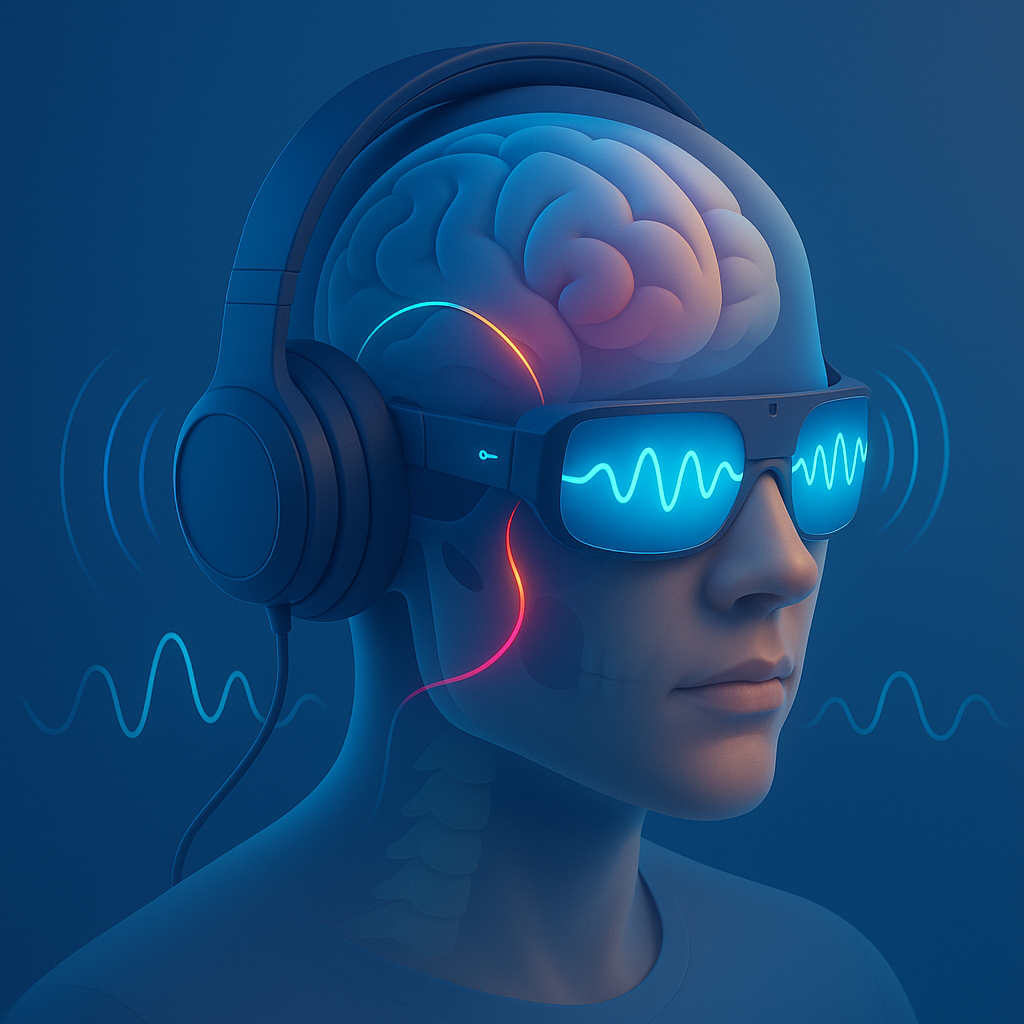
Technology:
Audio-Visual Entrainment
(AVE)
Medium:
Rhythmic auditory and visual stimuli
Purpose:
Influence brainwave activity for relaxation or heightened focus
Delivery:
Specialized glasses and headphones
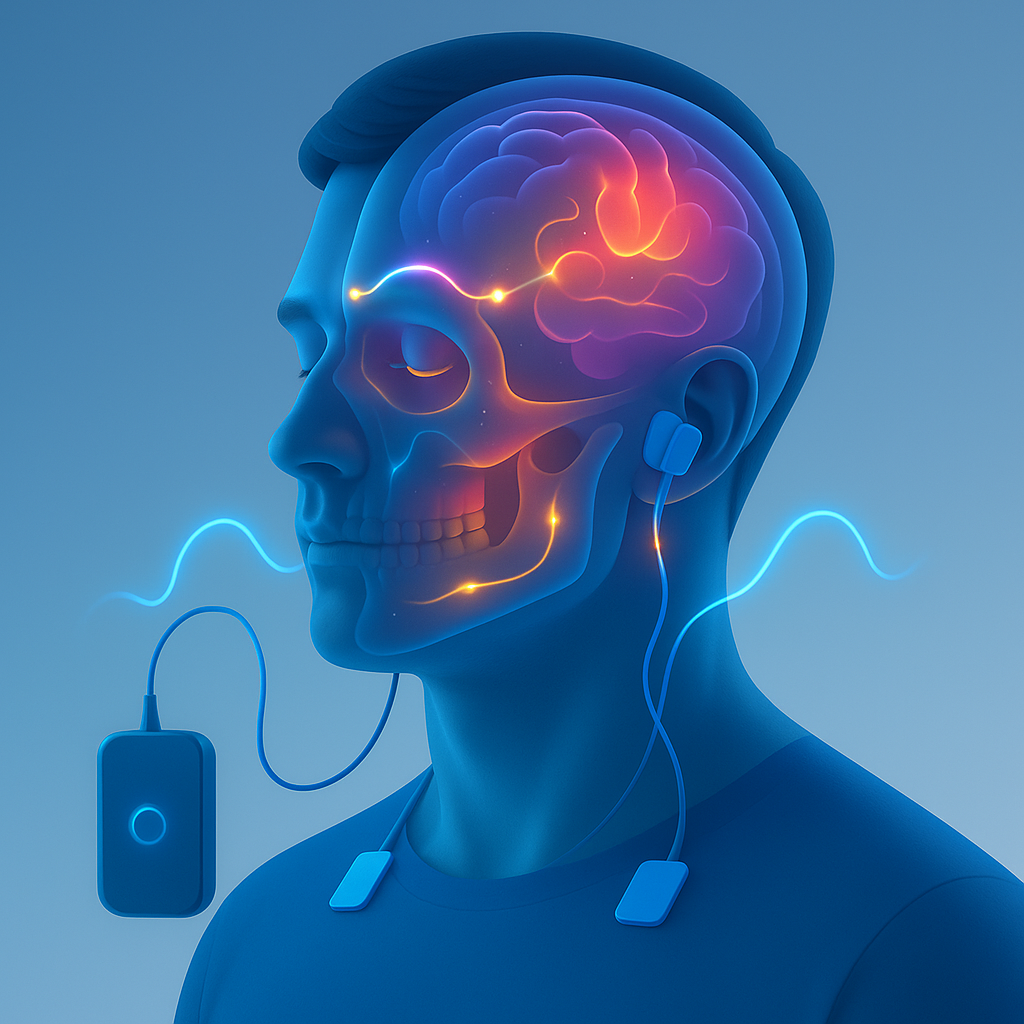
Technology:
Cranial Electrotherapy Stimulation
(CES)
Medium:
Low-level electrical impulses
Purpose:
Regulate mood, sleep, and pain perception
Delivery:
Electrodes affixed to the skin
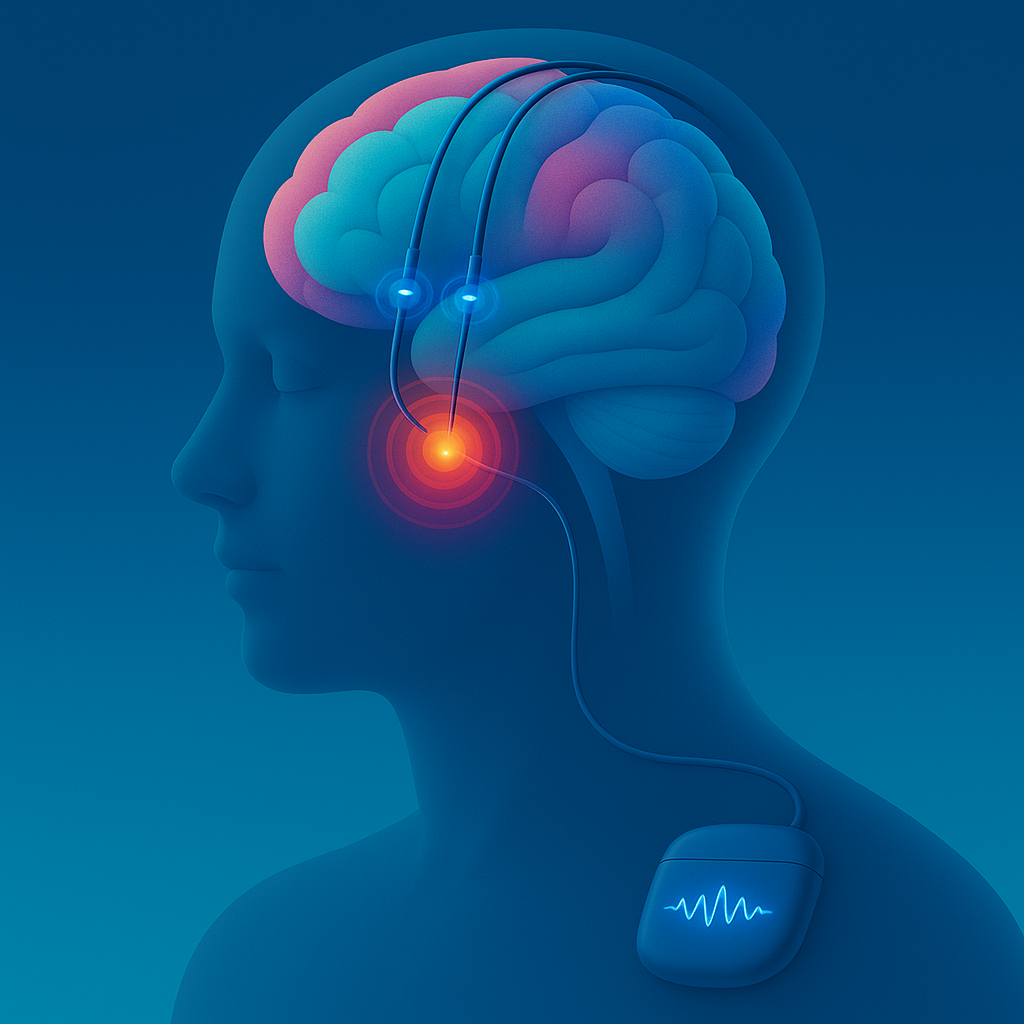
Technology:
Deep Brain Stimulation
(DBS)
Medium:
Targeted pulses of electricity
Purpose:
Suppress abnormal brain signals associated with various mood disorders
Delivery:
Electrodes surgically implanted into the brain
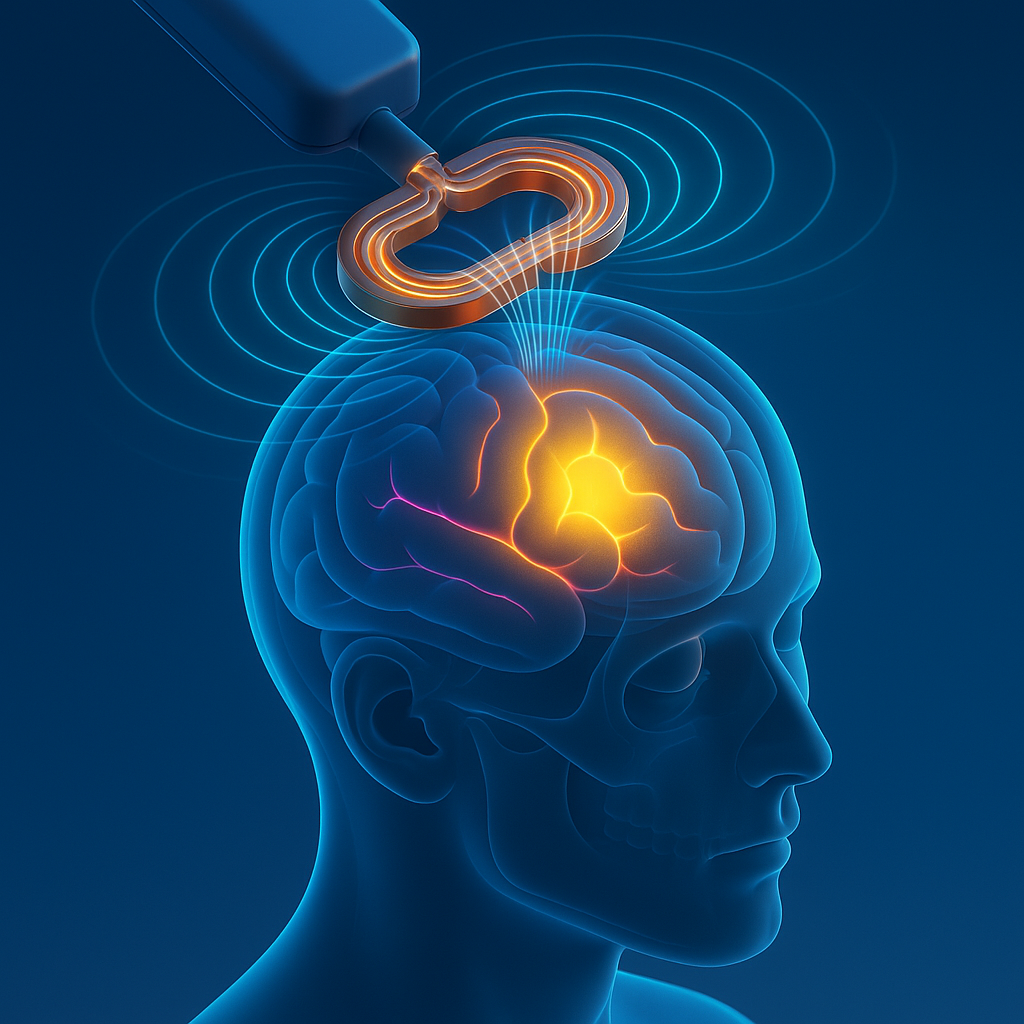
Technology:
Fast Gamma Magnetic Stimulation
(FGMS)
Medium:
Magnetic fields oscillating at high gamma frequencies
Purpose:
Entrain brain oscillations
Delivery:
Headband-mounted coil
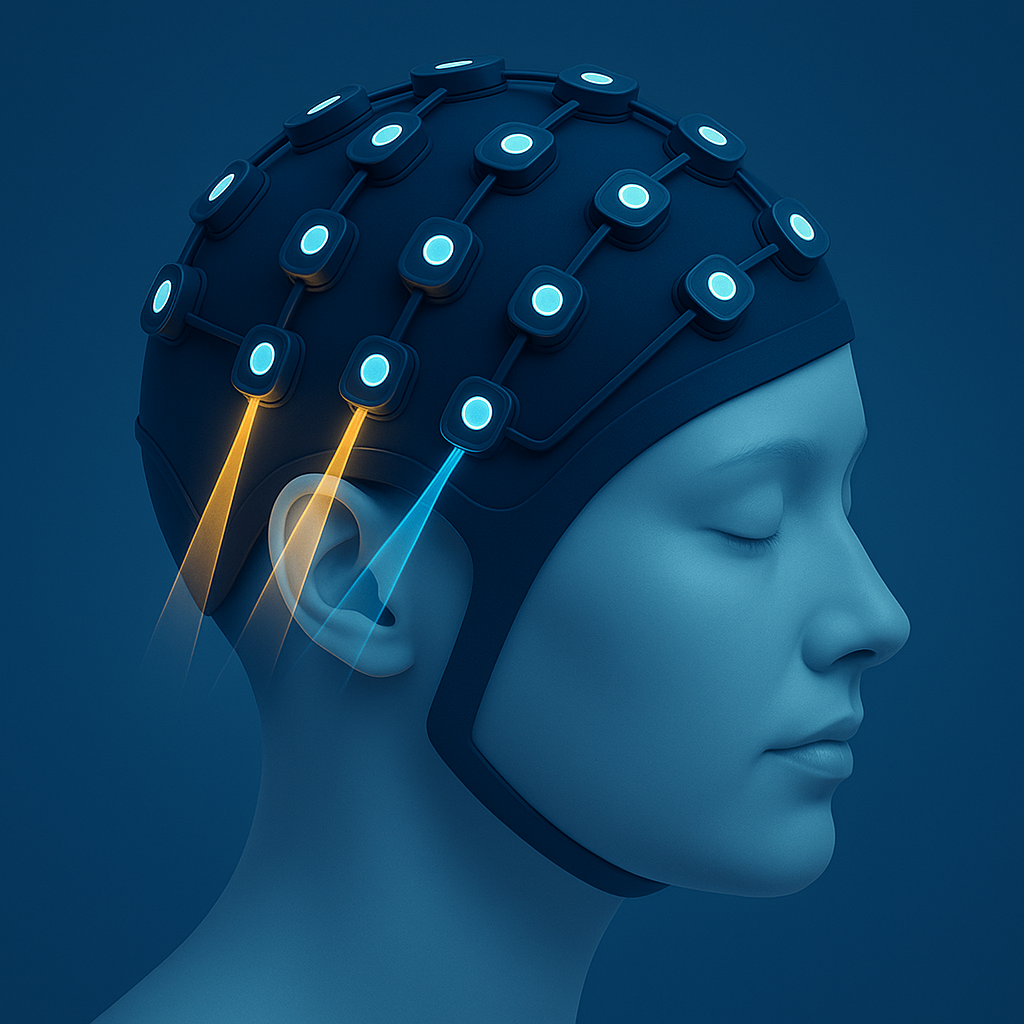
Technology:
Functional Near-Infrared Spectroscopy
(fNIRS)
Medium:
Reflections of near-infrared light
Purpose:
Measure changes in blood oxygenation and hemodynamics to infer neural activity
Delivery:
Wearable, potentially portable headset

Technology:
Gamma Sensory Stimulation
(GSS)
Medium:
Video, audio, and/or tactile stimuli at gamma-range frequency
Purpose:
Entrain brain oscillations
Delivery:
Wearable or handheld device
Technology:
Light Therapy
(Phototherapy)
Medium:
Visible light in white or blue frequencies
Purpose:
Influence body processes for sleep, mood, and energy
Delivery:
External light source
Technology:
Transcranial Low-Intensity Pulsed-Wave Ultrasound
(LIPUS)
Medium:
Low-intensity pulsed sound waves
Purpose:
Induce mechanical and thermal effects on brain tissue
Delivery:
Monitored external transducer
Technology:
Microcurrent Electrical Therapy
(MET)
Medium:
Very low-intensity electrical currents
Purpose:
Promote cellular repair and reduce pain
Delivery:
Electrodes placed on the skin
Technology:
Photobiomodulation
(PBM)
Medium:
Red or near-infrared light
Purpose:
Stimulate mitochondrial activity and reduce inflammation
Delivery:
External, wearable, or internasal device
Technology:
Pulsed Electromagnetic Field Therapy
(PEMF)
Medium:
Low-frequency electromagnetic pulses
Purpose:
Stimulate cellular repair
Delivery:
Full-body or targeted devices
Technology:
Transcranial Direct Current Stimulation
(tDCS)
Medium:
Direct, unidirectional electrical currents
Purpose:
Modulate brain activity and enhance neuroplasticity
Delivery:
Two electrodes on the scalp
Technology:
Transcutaneous Electrical Nerve Stimulation
(TENS)
Medium:
Low-voltage electrical currents
Purpose:
Stimulate nerves and manage pain
Delivery:
Electrodes placed on the skin
Technology:
Transcranial Magnetic Stimulation
(TMS)
Medium:
Magnetic fields
Purpose:
Stimulate cortical nerve cells
Delivery:
External magnetic coil